When questions about biological fatherhood become connected to legal matters, having reliable DNA evidence can be extremely important. An Accredited Legal Paternity DNA Testing Philippines service is designed for situations where the identity of participants, sample collection, documentation, and laboratory procedures may need to be carefully established. Unlike a private DNA test performed simply for personal knowledge, legal testing involves additional safeguards intended to document where the samples came from and how they were handled. This distinction can matter when DNA results are being considered in matters involving filiation, child support, custody, inheritance, or other family-related proceedings. The Philippine Supreme Court has recognized DNA testing as a valid method of determining filiation when parentage is an issue. Understanding how the process works can help individuals make informed decisions before arranging a test.
Understanding Accredited Legal Paternity DNA Testing in the Philippines
An Accredited Legal Paternity DNA Testing Philippines service generally refers to DNA testing performed under controlled procedures intended to support a legal purpose. The central question in a paternity test is whether the alleged father shares the expected genetic relationship with the child. DNA analysis can provide highly informative scientific evidence because genetic markers inherited from biological parents can be compared with those found in the child. However, a legal DNA test involves more than laboratory analysis alone. The identities of the people providing samples and the handling of those samples must also be documented appropriately. This is why people seeking DNA evidence for a legal matter should ask specifically for a legal or court-oriented testing procedure rather than automatically choosing a standard personal test. The Supreme Court has stated that DNA testing is a valid method of determining filiation in cases where filiation is in issue, making DNA evidence an important tool in appropriate Philippine legal proceedings.
What Makes a Paternity DNA Test Legal?
A legal paternity DNA test is distinguished by procedures designed to document the identity and integrity of the samples. During a personal or peace-of-mind test, participants may simply provide samples for private information, with fewer formal identification requirements. A legal test generally requires stronger controls because the result may become part of a legal proceeding. Participant identities may need to be verified using appropriate identification documents before samples are collected. The collection process should also be documented so there is a clear connection between each person and the sample assigned to that person. Proper labeling, sealing, recordkeeping, and controlled handling can further strengthen the documentation surrounding the test. These procedures help distinguish a formally collected legal sample from an anonymous or self-collected sample that may have limited value for a court-related purpose.
Why Accreditation and Laboratory Standards Matter
Choosing a qualified testing provider is an important part of arranging legal DNA testing. Accreditation or other recognized laboratory credentials can provide useful information about a laboratory’s quality systems, technical competence, and testing procedures. However, consumers should avoid assuming that the word “accredited” by itself answers every question about whether a particular DNA report will be accepted in a specific legal proceeding. It is important to determine what organization granted the accreditation and what activities or testing services are covered by that accreditation. A responsible provider should be able to explain where the testing is performed and what quality controls apply to the analysis. It should also be able to explain how participant identities, samples, laboratory records, and final reports are managed. Because legal evidence requirements can depend on the facts and circumstances of a case, individuals involved in litigation may also benefit from consulting their attorney about the specific documentation required.
Legal Paternity Testing vs. Peace-of-Mind Testing
Not every person who wants a paternity test needs a legal test. Someone who simply wants private information about a possible biological relationship may choose a non-legal or informational DNA test. Such a test can answer a personal question, but its collection process may not include the formal identity verification and chain-of-custody documentation associated with legal testing. A person who expects the result to be used in court should consider the intended purpose before the samples are collected. Obtaining a personal test first and discovering later that a separate legally controlled test is needed can result in additional time and expense. A legal paternity DNA test is therefore more appropriate when the result may need to support a formal legal matter. The safest approach is to tell the testing provider at the beginning that the test is intended for legal purposes so the appropriate procedure can be followed.
How the Legal Paternity DNA Testing Process Works
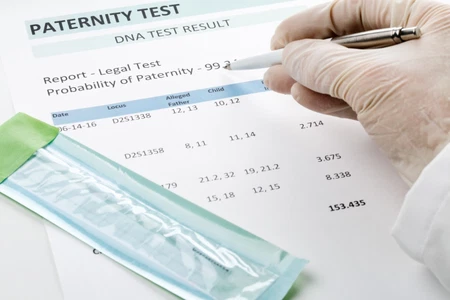
The process usually begins by identifying the purpose of the test and determining which participants need to provide samples. A testing provider may explain the documentation and identification requirements before scheduling the collection appointment. Participants may then be required to present valid identification so their identities can be properly associated with their DNA samples. DNA samples are commonly obtained using buccal swabs, which collect cells from the inside of the cheek. After collection, the samples can be labeled, documented, packaged, and transferred according to the provider’s established procedures. The laboratory then analyzes the genetic profiles and compares the relevant genetic markers to determine whether the alleged father is excluded or supported as the biological father. Once testing is complete, the provider issues a report containing the DNA findings and relevant information about the testing process.
Chain of Custody and Legal DNA Evidence
Chain of custody refers to the documented handling of evidence from collection through storage, transfer, analysis, and reporting. In legal DNA testing, this concept is important because the reliability of a result depends not only on the scientific analysis but also on establishing whose samples were actually tested. A properly controlled process can document who collected a sample, how it was identified, where it was transferred, and how it reached the laboratory. Documentation can include participant identification, collection records, sample labels, signatures, seals, timestamps, and laboratory records. The exact procedures can vary depending on the testing provider and legal circumstances. Philippine jurisprudence recognizes the broader importance of establishing the identity and integrity of evidence when evidentiary authentication is required. For this reason, people seeking an Accredited Legal Paternity DNA Testing Philippines service should ask specifically how the provider maintains documentation throughout the testing process.
Who May Need Legal Paternity DNA Testing?
Legal paternity testing may be relevant to people facing different types of family-related legal questions. A man who is disputing alleged biological fatherhood may seek testing to determine whether he is genetically related to a child. A mother or child may also seek DNA evidence when biological parentage needs to be established. Paternity evidence may become relevant in matters involving filiation, support, inheritance, custody, or recognition of a parent-child relationship. In some circumstances, DNA evidence may also be relevant when a person’s biological relationship to a deceased individual or family is disputed. The specific legal consequences of establishing paternity can vary depending on the circumstances and applicable Philippine law. A DNA result should therefore be viewed as scientific evidence concerning biological relationships rather than as an automatic determination of every legal right or obligation.
Paternity, Filiation, and Legal Rights in the Philippines
Biological paternity and legal filiation are related concepts, but they should not be treated as identical. Biological paternity concerns the genetic relationship between a father and child, while legal filiation concerns the person’s legally recognized relationship as an offspring. Philippine jurisprudence has discussed the distinction between biological relationships and legal status in family matters. The Supreme Court has explained that filiation can involve biological relationships even though legal rules may also govern questions concerning legitimacy and civil status. DNA evidence can therefore be highly relevant when biological parentage is disputed, but additional legal questions may still need to be resolved. In a 2026 decision involving a dispute over financial support, the Supreme Court emphasized that paternity or filiation must be established before a legal duty of support can arise in the circumstances addressed by that case. This demonstrates why people dealing with a legal paternity dispute should consider both the scientific testing process and the legal issue surrounding the test.
Choosing an Accredited Legal Paternity DNA Testing Provider
Choosing the right provider requires more than comparing advertised prices. Start by asking whether the provider specifically offers legal paternity DNA testing rather than only personal or informational testing. Ask about the laboratory’s accreditation, certifications, qualifications, and scope of services. Find out who collects the samples and how participants’ identities are verified. Ask how the provider maintains chain-of-custody documentation from collection to laboratory analysis. It is also useful to determine whether the testing is performed by the provider’s own laboratory or by another facility. Finally, ask what documentation accompanies the final report and whether the provider can clearly explain the limitations of the test in relation to legal proceedings.
Documents and Information Participants May Need
Participants should expect a legal DNA testing provider to request identification and other information necessary to document the testing process. Government-issued identification may be required to verify the identity of each participant. The provider may also request basic identifying information for the child and alleged father. If testing is connected to an existing legal case, information about the proceeding may be useful so the provider understands the intended purpose of the test. Participants should follow the laboratory’s specific instructions regarding appointments, consent forms, sample collection, and required documentation. It is important to provide accurate information because incorrect identification can create problems with the documentation surrounding the test. People should also keep copies of important forms, receipts, collection records, and the final DNA report for their records and, when appropriate, provide them to their legal counsel.
Privacy and Confidentiality Considerations
DNA testing involves highly personal biological information, so privacy should be considered before choosing a provider. Participants should ask how DNA samples are stored, how reports are protected, and who can access the information. It can also be useful to ask whether biological samples are retained after testing and, if so, for how long. Individuals should review consent forms and privacy policies carefully before providing samples. A professional provider should have clear procedures for protecting personal information and limiting access to authorized individuals. Privacy becomes particularly important when a test involves children, family disputes, or sensitive legal proceedings. Choosing a provider that takes confidentiality and information security seriously can help participants manage the personal nature of DNA testing more responsibly.
Common Mistakes to Avoid
One common mistake is ordering a standard home or personal paternity test when the result may later be needed for court. Another mistake is failing to ask how participant identities are verified during sample collection. People may also overlook the importance of documented sample handling and assume that any DNA report will automatically have the same legal value. Selecting a provider only because it offers the cheapest price can also create problems if the testing procedure does not meet the participant’s needs. Another issue is failing to retain the original documentation associated with the test. People should also avoid assuming that a DNA result automatically resolves custody, support, inheritance, or other legal matters. When a paternity test is connected to an active dispute, obtaining appropriate legal guidance before testing can help ensure that the selected procedure matches the purpose for which the evidence is needed.
Questions to Ask Before Scheduling a Legal Paternity DNA Test
Before scheduling an Accredited Legal Paternity DNA Testing Philippines service, prospective clients should ask several practical questions. First, they should ask whether the test is specifically designed for legal use. Second, they should ask about the laboratory’s accreditation and the scope of that accreditation. Third, they should ask how participant identities are verified and how samples are collected. Fourth, they should ask how chain-of-custody records are created and maintained. Fifth, they should ask where the DNA analysis takes place and who performs the testing. Sixth, they should ask what information is included in the final report and how the report is delivered and protected. These questions can help individuals compare providers based on quality, documentation, transparency, and suitability rather than price alone.
FAQ: Accredited Legal Paternity DNA Testing Philippines
Is a legal paternity DNA test different from a home DNA test?
Yes, the intended purpose and collection procedures can be different. A home or peace-of-mind test is generally designed to provide private information about a biological relationship. A legal test typically includes additional identity verification and documentation intended to establish the connection between the participants and their samples. Chain-of-custody procedures may also be used to document sample handling. If a person expects the result to be used in a court proceeding, it is important to tell the provider this before testing begins. The provider can then explain which collection procedure and documentation are available. The exact evidentiary requirements, however, depend on the particular legal matter.
Can a paternity DNA test be used in a Philippine court?
DNA evidence can be relevant to Philippine court proceedings involving filiation and paternity. The Philippine Supreme Court has expressly recognized DNA testing as a valid method of determining filiation when that issue is presented. However, whether particular evidence is admitted and what weight it receives can depend on the circumstances, applicable procedural rules, and the court handling the matter. A legal DNA test can provide scientifically relevant evidence, but it should not be treated as a guarantee of a particular court outcome. Anyone involved in active litigation should discuss evidence requirements with qualified legal counsel. Selecting an appropriately documented legal testing process can help address the scientific and procedural aspects of the evidence.
Why is chain of custody important?
Chain of custody helps document what happened to a sample from collection through laboratory analysis. It can establish a traceable record connecting the identified participant to the sample that was tested. This can be particularly important when DNA evidence is intended for a legal proceeding. Documentation may include identification, sample labeling, collection information, transfers, and laboratory records. The specific procedures depend on the provider and circumstances of the case. A testing provider should be able to explain its process clearly before participants provide samples. Understanding these procedures can help individuals make a more informed decision about legal DNA testing.
What samples are normally used for paternity testing?
Buccal-cell samples collected from the inside of the cheek are commonly used for paternity DNA testing. The collection procedure is generally simple and does not require a blood draw in typical testing situations. For legal testing, however, the important issue is not simply the type of biological sample used. The collection must also be properly associated with the identity of the participant and documented according to the provider’s legal testing procedures. Participants should follow the laboratory’s instructions regarding sample collection. They should also avoid providing unofficial samples when a controlled legal test has been requested. The provider can explain the exact collection method and requirements.
Does a positive paternity result automatically establish legal paternity?
A DNA result can provide strong scientific evidence of a biological relationship, but biological findings and legal determinations are not necessarily identical. Philippine law contains specific rules concerning filiation, legitimacy, parental authority, support, and related family matters. The Supreme Court has recognized that biological filiation and legal status can involve distinct legal concepts. Therefore, a person should not assume that a DNA result by itself automatically resolves every legal issue concerning a child. The specific circumstances of the family and the applicable law must be considered. A qualified attorney can explain what additional legal steps may be relevant.
Can legal paternity DNA testing help with inheritance disputes?
DNA evidence may be relevant when a disputed biological relationship affects an inheritance or succession matter. Establishing biological filiation can be an important factual issue in certain family disputes. The Supreme Court has previously ordered the reception of DNA evidence in proceedings involving disputed filiation. However, inheritance rights involve legal rules that extend beyond simply establishing a genetic relationship. The appropriate procedure can depend on whether the alleged parent is living, whether the child has been recognized, and the other facts of the case. Individuals involved in inheritance disputes should obtain legal advice regarding their specific circumstances. A properly documented DNA test can then be considered as part of the broader evidence strategy.
How should I choose an accredited legal paternity DNA testing provider in the Philippines?
Begin by checking the provider’s laboratory credentials and asking what accreditation or certification applies to its services. Confirm that the provider offers a legal paternity test with documented participant identification and sample collection. Ask how chain of custody is maintained and what records are supplied with the final report. Find out where the actual laboratory analysis is performed and whether another laboratory is involved. Review privacy procedures, turnaround expectations, fees, and any requirements for additional participants. Most importantly, explain the intended legal purpose before the test is scheduled. These steps can help you select a provider whose procedures are appropriate for your particular needs.
Takeaway
Choosing an Accredited Legal Paternity DNA Testing Philippines service involves more than finding a laboratory that can analyze DNA. The legal testing process should address participant identification, controlled sample collection, documentation, sample handling, laboratory analysis, and reporting. These elements help create a traceable process when DNA evidence may be relevant to a legal matter. Philippine Supreme Court decisions recognize DNA testing as a valid method for determining filiation when parentage is disputed, while also demonstrating that biological evidence operates within a broader legal framework. Anyone considering testing should clearly identify whether the purpose is personal information or legal evidence before selecting a test. When a dispute involves custody, support, inheritance, recognition, or another legal issue, professional legal advice can help clarify what evidence and procedures are appropriate. By carefully evaluating laboratory credentials, legal collection procedures, chain of custody, privacy protections, and reporting, individuals can approach paternity DNA testing with greater confidence and a clearer understanding of what the results can and cannot establish.